
5 min read
Key Takeaways
- SIL provides daily support in shared or individual homes.
- SDA funds the physical housing for people with high support needs.
- ILO funds customised living arrangements built around individual choice.
- Choosing the right option depends on your needs, goals and living preferences.
- Number 1 Care Provider can help you navigate eligibility, funding and setup.
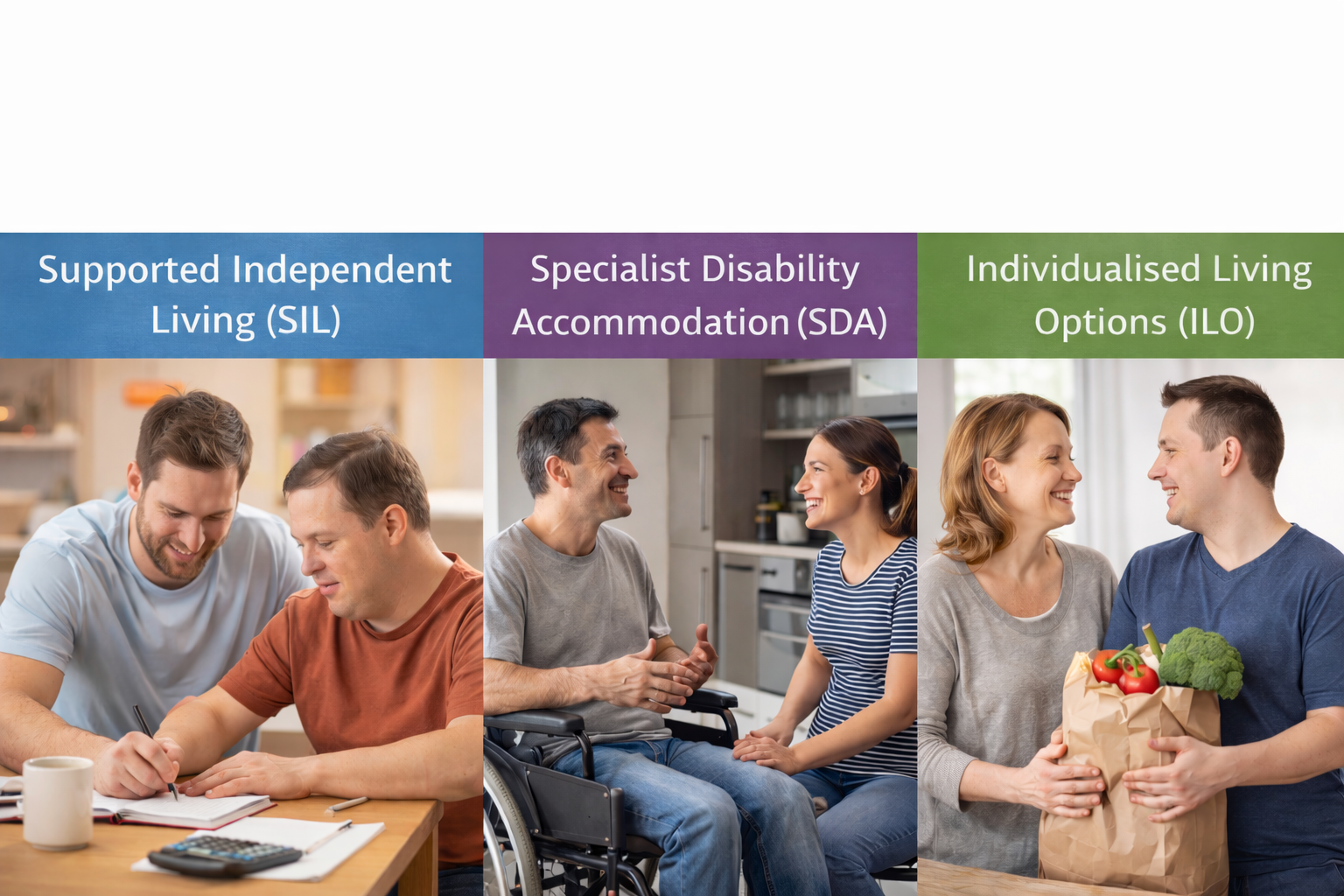
When it comes to NDIS home and living supports, the options can sometimes feel overwhelming. Terms like SIL, SDA and ILO are often mentioned together, but they each provide different types of support for different needs. If you’re wondering how they work, what sets them apart and which option might suit you or someone you support, this guide will help clarify the key differences.
What Is Supported Independent Living (SIL)?
Supported Independent Living (SIL) is an NDIS service that provides daily support for people living with disability who want to build independence while living in a shared or individual setting. SIL is designed for people who need help with everyday tasks such as:
- Personal care
- Meal preparation
- Cleaning and laundry
- Medication management
- Overnight support
SIL is most commonly used in shared living arrangements, where a small group of NDIS participants live together with support workers available on-site. However, SIL can also be arranged for individual settings if appropriate. The key thing to understand is that SIL funds the support, not the housing. You can learn more about Supported Independent Living services offered by Number 1 Care Provider here.
What Is Specialist Disability Accommodation (SDA)?
Specialist Disability Accommodation (SDA) refers to purpose-built housing designed for NDIS participants with very high support needs or extreme functional impairment. SDA housing includes features such as:
- Wheelchair accessibility
- Wide doorways and open spaces
- Assistive technology integration
- Robust construction for behaviours of concern
- Enhanced safety and emergency systems
SDA is not about personal care or day-to-day support. Instead, it provides a suitable physical environment that allows other supports, like SIL, to be delivered safely and effectively. SDA is only available to a small percentage of NDIS participants who meet specific eligibility criteria. It’s typically included in an NDIS plan following an extensive housing needs assessment.
What Is Individualised Living Options (ILO)?
Individualised Living Options (ILO) is a flexible support model for people who want to explore different ways of living that suit their lifestyle, relationships and support needs. ILO is different from SIL or SDA because it doesn’t rely on a fixed housing model. Instead, it’s tailored around the participant and can include arrangements such as:
- Living with a host family
- Sharing a home with a chosen housemate
- Living alone with formal and informal support networks
ILO funding is typically rolled out in stages. First, there’s a design phase, where the ideal living setup is planned. Then, the support team helps put that plan into action. ILO gives participants more choice and control over how and where they live. It’s a great option for people who may not need 24/7 support or who want something more flexible than traditional shared living.
Key Differences Between SIL, SDA and ILO
To keep things simple, here’s how these three NDIS supports differ:
- SIL (Supported Independent Living):
Funds the support you receive at home. Mostly used in shared living settings. - SDA (Specialist Disability Accommodation):
Funds the housing itself, specially built for people with high physical or behavioural support needs. - ILO (Individualised Living Options):
Funds the design and implementation of a personalised living arrangement. More flexible and relationship-focused.
Each one plays a different role in helping participants live more independently, with the right mix of support and environment.
Which Option Is Right for You?
Choosing the right home and living support depends on several factors, including:
- Your level of support needs
- How much help you require day-to-day
- Whether you prefer living alone or with others
- Your long-term independence goals
- Whether you have formal or informal support available
All three options SIL, SDA and ILO must be included in your NDIS plan and approved as reasonable and necessary. The best way to decide is by speaking with your support coordinator or allied health team, who can help assess your needs and preferences.
How Number 1 Care Provider Can Help
At Number 1 Care Provider, we support NDIS participants to explore their living options and find what works best for them. Whether you’re looking at Supported Independent Living or exploring ILO arrangements, our team can assist with:
- Navigating eligibility and plan requirements
- Preparing for NDIS assessments
- Coordinating support services
- Matching you with the right housing partners
We believe everyone deserves to live in a place that feels like home. You can learn more about our Supported Independent Living and support coordination service to get started.
Need Help Understanding Your Options?
If you’re still unsure which home and living support suits your needs, you’re not alone. It can be a complex decision, but you don’t have to figure it out on your own. Contact our team to chat with someone who can walk you through the options. Ready to get started? Make a referral online and we’ll be in touch to discuss how we can help.
Together, we’ll find a living arrangement that supports your independence, comfort and long-term goals.